仕手 (して)
My dictionary only gives the meanings “operator”, “speculator” for this word, but as stated in the novel, it means speculators who pool funds to manipulate stock prices and artificially influence the market.
Blog
I finished the Showa chapter, it was so good, it could have been a novel in itself! But I’m only halfway through!
頂上作戦
頂上作戦 (ちょうじょうさくせん) are major police crackdowns targeting yakuza leaders to dismantle their organisations.
シノギ is slang for yakuza income activities/sources.
The investigation is so so great, I’m really enjoying this novel. I’m still in the Showa chapter, I don’t know how long each chapter is.
The number of characters is well above average, I like novels that have such a density of information, where even peripheral characters are named, it makes everything feek more real.
The plot is also more and more complex, I really think it’s best for me to focus entirely on this book until I finish it. I feel like it would be easy to forget key elements if I read several things at the same time or leave the book untouched for some days.
I realised I still haven’t started the new Genshin event… I’ll try to find time for it today!
昭和電工事件 and 昭和電工事件
昭和電工事件 (しょうわでんこうじけん)
These are concealed war assets that the Imperial Japanese Army gathered towards the end of WWII to prepare for a battle on the mainland. Some assets like precious metals, gems, diamonds, etc. were appropriated from civilians. After the end of the war, the Army, politicians and black market operators hid these assets to prevent them from being confiscated by the GHQ, so they just magically disappeared. They later were used fund political parties and organised crime during the post-war period. An example of it is the:
昭和電工事件 (しょうわでんこうじけん) 1948
A massive bribery and corruption case involving Showa Denko, a chemical company, who bribed politicians to secure low interest government loans. Prime Minister Hitoshi Ashida and members of his cabinet were forced to resign, and top executives at Showa Denko were taken into custody.
The old western-style buildings of Hakodate branches of banks like the Bank of Japan or Yasuda Bank are in the financial district, together with the Fugaku Bank, though this one is of course fictional.
I like how the author constantly integrates real facts and events to the fiction, it makes the story feel very real and anchored in its period.
五稜郭
五稜郭 (ごりょうかく)- Goryōkaku
A star shaped fort in Hakodate where took place the 箱館戦争 (はこだてせんそう) Battle of Hakodate.
So the name of the city Hakodate changed at some point (apparently in 1869) from 箱館 to 函館.
ウーマン・リブ
ウーマン・リブ is short for Women’s Liberation, apparently the term was first used by Asahi in 1970.
I want to start a new Taiwanese novel, but I’m so engrossed in 百年の時効 right now, it might be better to not start something new while I’m still reading it? At the same time, my reading challenge was to try to always have read book in each of my target languages…
ゴジラ対メカゴジラ
ゴジラ対メカゴジラ released in 1974 and was the 14th film of the franchise.
I’m not even 100% sure, but I think I saw one Godzilla movie once? Maybe I should try to watch at least one or two movies from the franchise…
For the first time since I started playing R1999, I won’t be able to complete the achievement card.
I can’t get 6 stars on the Focused Flashback event… My dynamo team got 3 stars, plant impromptu only managed to get 2, and there’s nothing on my account that can even clear the third stage…
I’m not pulling meta and I’m skipping entire archetypes to guarantee the characters I like or even get them to P5, so I don’t care about the rewards of this kind of events and I’m completely fine with not clearing all the endgame content. But locking the achievements behind meta pulls is a bit strange… 6 stars is also a big requirement. Like I dont’ think there’s anything you can do, it’s not like the needed characters were on banner…
I cleared IT with full flowers this time! It’s much easier for me when there’s no geo!
The run was actually very smooth and easy. Gaming is always one of my favourite characters to play, there’s that eidolon stage, that I always clear with him if I can.
I’ve been very tired today, so couldn’t progress as much as I wanted, but wow, this novel is really great. It’s very well written, you can immediately tell that you’re in the Showa chapter compared to the Reiwa opening one.
Chapter 2 reminds me of 夜の終わる時 (1963) by Shoji Yuki. I find that the author really managed to give a good depiction of the time while still keeping the investigation engrossing. It now feels like the case is going to be much more huge than what it seems at first.
| Word | Reading | Definition |
|---|---|---|
| 真鍮 | しんちゅう | brass |
| 古株 | ふるかぶ | old-timer; veteran; senior |
| 手練れ | てだれ | mastery; skillfulness; dexterity |
| 刃こぼれ | はこぼれ | nick in a blade (sword, knife); chip in a blade |
| 袈裟斬り | けさぎり | slashing (someone) with a sword diagonally from the shoulder down to the waist |
上野消火器商一家五人殺し
About the aftermath of the 上野消火器商一家五人殺し case, both perpetrators were sentenced to death in 1979 and executed in 1986
Hiroo Onoda
Hiroo Onoda is known for continuing fighting after the end of WWII, because he didn’t believe Japan had surrendered and thought news announcing the end of the war were ennemy propaganda. Initially with three other men then alone, he continued a guerrilla warfare for 29 years in the Philippines. A Major had to go to the Philippines to officially relieve him of his duties in 1974. He returned to Japan in March of this year and was the center of media’s attention. Some considered him a hero even though he probably killed many civilians during all these years.
Shoichi Yokoi has a similar fate, staying hidden on Guam for 28 years after the end of the war. He didn’t believe the war was over and stayed in the jungle with other comrades, then alone. He didn’t want to surrender and return alive to Japan.
At the time of rapid economic growth, after the Olympics and the Osaka Expo, it’s easy to imagine that the reappearance of these soldiers who continue fighting for nearly 30 years and thought returning alive to Japan was a disgrace must have been a shock to most people.
Yoshikawa Chōichi is famous for defining the forensic evidence known as Yoshikawa Line. He was a pioneer of modern Japanese forensic investigation and criminal identification. His notes posthumously published under the title 刑事鑑識 have become a reference text for forensic investigators (in 1974, Yuasa still refers to it.)
July is such a great reading month so far, I loved all the books I’ve read. It’s crazy, because I was wondering which one between 警察執勤中:正義的代價 and 変な地図 would be my favourite book of the month, then I read 消失的你 and thought it might actually be this one, but now I’m almost certain it’s going to be 百年の時効 if I manage to finish it this month (and of course, if the novel turns out as good as the beginning was).
I’m glad I found all these gems, it makes all the rain, heat and humidity more bearable
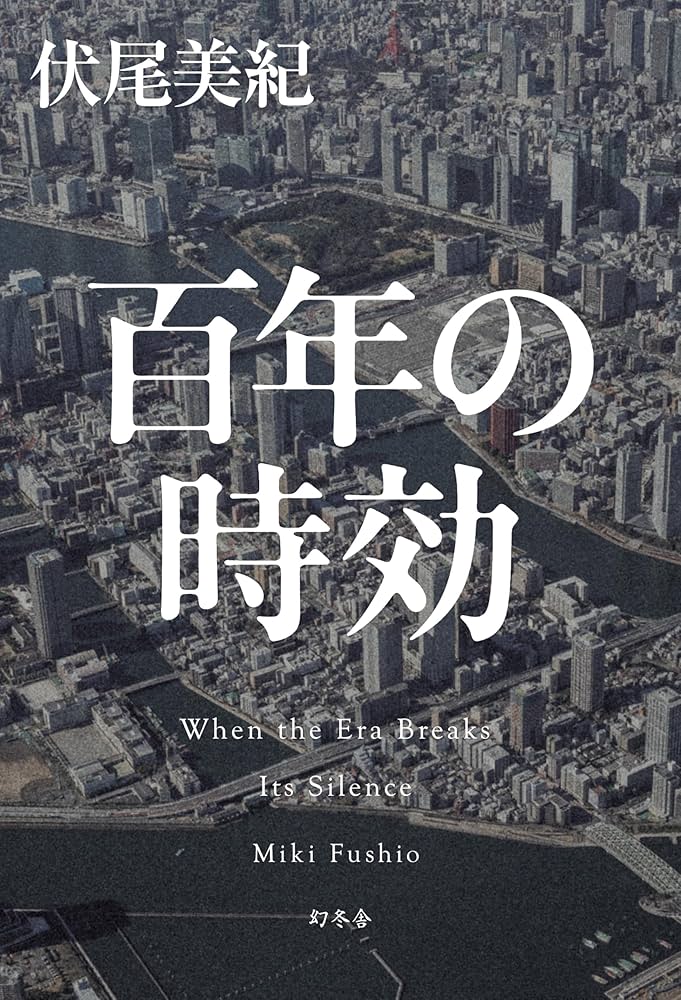
I started 百年の時効 and finished the first chapter. This book is incredibly engrossing! The first chapter was taking place nowadays, but it also settled the differences between the eras, how mentalities and practices changed, like for example how investigation are conducted now compared to the 70s, or the differences in means available to the police. It also mentions several real cases that all have an importance in Japanese recent history, so reading this novel is also an opportunity for me to learn about all these events.
I spent a lot of time reading about several of the real cases mentioned, so I haven’t made much progress on the reading itself, but the beginning is fantastic and the plot looks really great.