百年の時効 was absolutely amazing, it’s such a great police procedural and so well written, so well documented and so engrossing all along.
The novel really shines with its setting, it spawns three eras, Showa, Heisei and Reiwa, and we follow four police detectives working on the same case: the brutal killing of a family that took place in 1974.
The novel is a real exploration of Japan’s society, politics and economical landscape of the second half of the 20th Century, everything felt very real and very documented. Real criminal cases, persons and major events that completely shook Japanese society are present in the novel, but what I really loved is that they also affect our plot and our fictional characters, even sometimes dramatically, so the story felt very real and anchored in reality. Many times I had the feeling that I was reading romanised true crime and had to remind me that it was fiction… that’s how real it all felt.
The police detectives we follow are also all very different, influenced by their generation, their background, the era in which they grew up. It’s also true for the way investigations are conducted, from the time when the police actually cooperated with criminal organisations, to the developments in psychology or forensics. I personally found this aspect of the novel very interesting, it sometimes gave me Mindhunter vibes!
Not only does the novel spawns decades, but the plot is also closely linked to Japanese history: the setting is not just a setting, it influences the plot, so we travel through these eras while investigating the case. I really loved it, the author really managed to keep the novel engrossing, with a really good pace all along. It never felt like the case was a pretext to depict Showa society or something like that, the plot really stays central all along and it was impossible to put the book down.
The novel is really a solid police procedural, but it also borrows from other genres, sometimes feeling like a financial thriller, sometimes like a shakai-ha mystery depicting societal corruption and the connections between politicians, banks, yakuza and the police, sometimes like a honkaku mystery (the end in particular felt like the big reveal of detective novels).
The plot is very complex, there are a lot of ramifications and it’s important to have a clear vision of the characters’ relationships and what happened when. Even though I read it everyday until I finished it, I still had to take some notes to remember important facts or how characters were linked.
There is not a single thing I didn’t like, I find 百年の時効 really impressive, I really hope it gets translated into English!
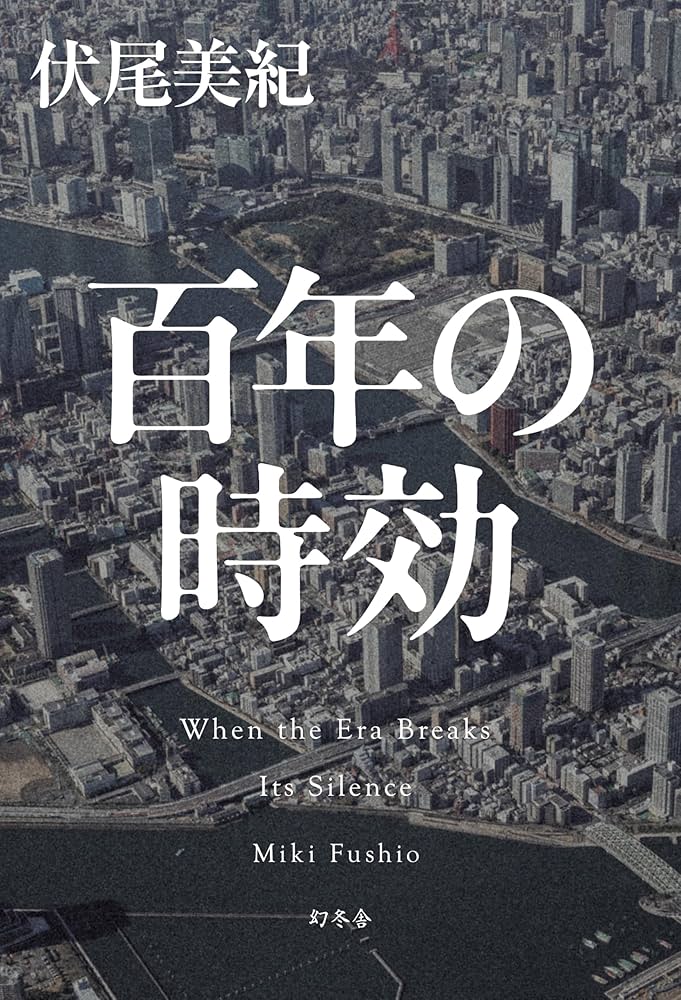
百年の時効
- このミステリーがすごい! · 2026 · #4
- 日本推理作家協会賞 · 2026
- 週刊文春ミステリーベスト10 · 2025 · #3
Review
Updates
I finished it! The end was so… both amazing and unexpected, it felt like reading a honkaku mystery all of a sudden, I was not anticipating that! I thought that the mystery was solved already, and it was just a matter of finding enough evidence, but the end still manages to surprise the reader.
I finished the Heisei chapter! I didn’t think the plot could get more complex than it already was, but it did! The roots and ramifications of the case go much deeper than it looks at first, this book is really impressive.
Not reading as much as I would like today, but I do want to read this book every day if possible, because the plot is so complex, I’m afraid I will forget details. Writing this book must have required a lot of research and work, it’s crazy how good it is. I’m 3/4 into it, and the book has been extremely engrossing all along.
I was afraid that after the Showa chapter, the story would lose its pace and suspense, but the Heisei chapter is as good as the previous one!
I finished the Showa chapter, it was so good, it could have been a novel in itself! But I’m only halfway through!
The investigation is so so great, I’m really enjoying this novel. I’m still in the Showa chapter, I don’t know how long each chapter is.
The number of characters is well above average, I like novels that have such a density of information, where even peripheral characters are named, it makes everything feek more real.
The plot is also more and more complex, I really think it’s best for me to focus entirely on this book until I finish it. I feel like it would be easy to forget key elements if I read several things at the same time or leave the book untouched for some days.
I’ve been very tired today, so couldn’t progress as much as I wanted, but wow, this novel is really great. It’s very well written, you can immediately tell that you’re in the Showa chapter compared to the Reiwa opening one.
Chapter 2 reminds me of 夜の終わる時 (1963) by Shoji Yuki. I find that the author really managed to give a good depiction of the time while still keeping the investigation engrossing. It now feels like the case is going to be much more huge than what it seems at first.
I started 百年の時効 and finished the first chapter. This book is incredibly engrossing! The first chapter was taking place nowadays, but it also settled the differences between the eras, how mentalities and practices changed, like for example how investigation are conducted now compared to the 70s, or the differences in means available to the police. It also mentions several real cases that all have an importance in Japanese recent history, so reading this novel is also an opportunity for me to learn about all these events.
I spent a lot of time reading about several of the real cases mentioned, so I haven’t made much progress on the reading itself, but the beginning is fantastic and the plot looks really great.
Post
仕手
仕手 (して)
My dictionary only gives the meanings “operator”, “speculator” for this word, but as stated in the novel, it means speculators who pool funds to manipulate stock prices and artificially influence the market.
頂上作戦
頂上作戦 (ちょうじょうさくせん) are major police crackdowns targeting yakuza leaders to dismantle their organisations.
シノギ is slang for yakuza income activities/sources.
The old western-style buildings of Hakodate branches of banks like the Bank of Japan or Yasuda Bank are in the financial district, together with the Fugaku Bank, though this one is of course fictional.
I like how the author constantly integrates real facts and events to the fiction, it makes the story feel very real and anchored in its period.
五稜郭
五稜郭 (ごりょうかく)- Goryōkaku
A star shaped fort in Hakodate where took place the 箱館戦争 (はこだてせんそう) Battle of Hakodate.
So the name of the city Hakodate changed at some point (apparently in 1869) from 箱館 to 函館.
ウーマン・リブ
ウーマン・リブ is short for Women’s Liberation, apparently the term was first used by Asahi in 1970.
ゴジラ対メカゴジラ
ゴジラ対メカゴジラ released in 1974 and was the 14th film of the franchise.
I’m not even 100% sure, but I think I saw one Godzilla movie once? Maybe I should try to watch at least one or two movies from the franchise…
Hiroo Onoda
Hiroo Onoda is known for continuing fighting after the end of WWII, because he didn’t believe Japan had surrendered and thought news announcing the end of the war were ennemy propaganda. Initially with three other men then alone, he continued a guerrilla warfare for 29 years in the Philippines. A Major had to go to the Philippines to officially relieve him of his duties in 1974. He returned to Japan in March of this year and was the center of media’s attention. Some considered him a hero even though he probably killed many civilians during all these years.
Shoichi Yokoi has a similar fate, staying hidden on Guam for 28 years after the end of the war. He didn’t believe the war was over and stayed in the jungle with other comrades, then alone. He didn’t want to surrender and return alive to Japan.
At the time of rapid economic growth, after the Olympics and the Osaka Expo, it’s easy to imagine that the reappearance of these soldiers who continue fighting for nearly 30 years and thought returning alive to Japan was a disgrace must have been a shock to most people.
Shibuya riot case
渋谷暴動事件: Shibuya Riot Case
The Shibuya riot case was a famous incident involving the New-left radical activists in 1971. In November, left-wing students and workers organised protests, but some members of a far-left group called 中核派 violently killed a 21-year-old police officer, beating him with iron pipe and setting him on fire with molotov cocktails.
7 members were identified as the ones who killed the policeman, 6 were arrested and prosecuted, but Masaaki Osaka (大坂正明) remained a fugitive for 46 years with the help of the 中核派.
Even though the status of limitation was 15 years at the time, it is suspended while accomplices are on trial. Numerous and lengthy appeals made it so that these trials were dragged out, so the status of limitation for Osaka was paused and was not concluded in 2010, when the whole system was abolished in the case of murder and took place retroactively for cases that were still open in 2010. This is what allowed Osaka to be trialed in 2017 when he was finally arrested.
Sakuradamon
I didn’t know that, but apparently, the Tokyo Metropolitan Police Department is often referred to as Sakuradamon 桜田門 because the main building is facing the Sakurada Gate of the Imperial Palace. This gate is also where the Sakuradamon Incident took place as mentioned in the novel (it was the assassination of Ii Naosuke, a Tairō of the Tokugawa Shogunate).
But as the novel states, the Metropolitan Police Department HQ were originally located elsewhere and only moved there in 1931, because their previous building had been destroyed during the 1923 Great Kantō Earthquake.
三億円事件
三億円事件 - 300 million yen robbery
The 三億円事件 took place in 1968, it is the biggest heist in Japanese history and remains unsolved. A man, posing as a policeman, managed to fool bank employees who were transporting money. He made them believe that a bomb was hidden under the vehicle. The employees believed it because a few days earlier, the bank had received threats involving explosion. The man was able to drive away with the vehicle after scaring the employees away.
The scale of the investigation was massive, and they did check a ton of fingerprints one by one. A 19-year-old man was falsely accused and committed suicide. In 1975, the case reached its status of limitations.
Official name of the case is 現金輸送車強奪事件, but it is commonly referred to as 三億円事件.
10.000 yen banknotes
Prince Shōtoku (聖徳太子) was printed on the 10.000 yen banknotes when they first released in 1958, but the second series printed in 1984 had the portrait of Fukuzawa Yukichi (a Meiji philosopher) instead.
相場師
Apparently, the word 相場師 is not super familiar to Fujimori, so I guess it’s more a Showa thing. I understand it as a market wizard who trades following a mix of instinct and skill, and can make a fortune quickly. Some of these speculators have become some kind of legends, which seems to be the case for Sakurai.
I don’t know if the word itself is used a lot nowadays, investors are generally referred to as 投資家 or トレーダー.
Lockheed bribery scandals
ロッキード事件 - Lockheed bribery scandals
Lockheed is a US aerospace company that paid bribes to politicians of several countries to facilitate the sell of their aircraft. Japan was one of the countries involved,
Lockheed actually hired Yoshio Kodama, a right-wing ultranationalist, prominent figure in the organised crime and active in the criminal underworld from the 30s to the 70s, to influence Japanese airlines, notably All Nippon Airways, to buy one of Lockheed’s aircraft. They also paid considerable sums to the office of Prime Minister Kakuei Tanaka to facilitate the contrat. Kodama, Tanaka and All Nippon Airways all receive bribes.
Lockheed used Nicholas Deak, a banker and head of a huge financial group who worked with US secret service, to transfer the money to Japan via HK where Deak’s office was. This and other scandals will eventually force Deak to declare bankruptcy in 1984.
In 1976, actor Mitsuyasu Maeno who was associated with the Japanese ultranationalist movement tried to kill Kodama by crashing his plane on Kodama’s house. He used to respect Kodama, but considers that he betrayed the right-wing and the samurai code by accepting bribes, and caused a national disgrace (Lockheed had built aircrafts that fought against Japan in WWII).
Maeno and two of his friends rented two planes saying it was for the shooting of a film on kamikaze. Maeno then alone crashed his plane on Kodama’s house, killing two servants and himself in the process. Kodama, who was in another part of the house, was uninjured. He later died of a stroke in 1984 before his trial was concluded.
As for Tanaka, he was arrested on 1976 but released on bond, he was later sentenced to four years of prison in 1983 but remained free on appeal until his death. His political influence did not end with the scandal however and he was able to continue his political career with the support of his faction. The scandal did create a political turmoil and Prime Minister dissolved the Diet, but in the 1983 Japanese general election (also called the Lockheed Election - ロッキード選挙), Tanaka retained his seat at the Diet.
Characters
太田信三 (おおたしんぞう) is a former leader of a yakuza group affiliated to Isokawa-kai. He appeared several times before, but checking my list, it looks like I forgot to add it on first appearance.
I tried to remember if I knew any song by Hibari Misora, but I don’t think so… my knowledge of 20th century Japanese music is close to zero.
Yoshikawa Chōichi is famous for defining the forensic evidence known as Yoshikawa Line. He was a pioneer of modern Japanese forensic investigation and criminal identification. His notes posthumously published under the title 刑事鑑識 have become a reference text for forensic investigators (in 1974, Yuasa still refers to it.)
警視庁刑事部捜査一課管理官: Investigation Commander, First Criminal Investigation Division, Criminal Investigation Department, Tokyo Metropolitan Police Department.
- The 組織犯罪対策部/課 (Organised Crime Investigation Division) is mainly dealing with organised crime, firearms and drugs, etc.
- The Fugaku Bank (富岳銀行) has now become 新緑銀行.
- 世界最終戦論 military strategy and geopolitical doctrine, notably predicted the consolidation of two major blocks: the Western block led by the US, and the Eastern block led by Japan,
Quotes
世の中、一番あくどいのはヤクザより銀行さんかもな
— 鶴見
Vocabulary
| Word | Reading | Definition |
|---|---|---|
| 真鍮 | しんちゅう | brass |
| 古株 | ふるかぶ | old-timer; veteran; senior |
| 手練れ | てだれ | mastery; skillfulness; dexterity |
| 刃こぼれ | はこぼれ | nick in a blade (sword, knife); chip in a blade |
| 袈裟斬り | けさぎり | slashing (someone) with a sword diagonally from the shoulder down to the waist |
袈裟斬り’s name comes from a Buddhist monk’s stole 袈裟 and the way it hangs across the chest.
| Word | Reading | Definition |
|---|---|---|
| 相場師 | そうばし | master trader, stock speculator |
| 異端児 | いたんじ | nonconformist, maverick, rebel, enfant terrible |
| 兜町 | あぶとちょう | Kabutochō, location of Tokyo Stock Exchange. |
| 徒花 | あだばな | enterprise or plan, etc. that comes to nothing, ephemeral bloom, something that doesn’t last |