Overall I really liked this series!
All the actors were excellent, and the characters personalities were complex enough to make them feel like real persons rather than drama tropes.
I also really loved how the series handled flashbacks and how it constantly tricked the spectator by hiding information that were revealed later on, giving a completely new interpretation to what happened.
There are one or two things I didn’t like as much, like the two chases scenes felt a bit off in style compared to the rest of the series, and some characters’ positions shifted a bit abruptly in the second half, but these are minor details.
Blog
| Word | Reading | Definition |
|---|---|---|
| 閉路電視 | bì lù diàn shì | closed-circuit television |
I finished the first chapter, and I loved it!
I don’t know in which direction it will go, but it’s very good so far.
追蹤手帶
追蹤手帶: Electronic Tracking Wristbands
Used in Hong Kong during covid to enforce mandatory home quarantine for person who tested positive, close contacts to covid patients and people arriving from overseas. It’s connected to an app and can detect when the person is living their quarantine place, alerting the authorities.
People arriving to Hong Kong had to wear it.
There’s a newspaper excerpt right at the beginning that looks like it’s a picture pasted in the text, it’s hardly readable on e-reader. I had to take a picture of the page, so that I could zoom in on the picture to read the text.
It’s so annoying when this kind of things are not optimised for digital reading…
I finished the first short story/novella, A Masked Ball, it was incredibly engrossing, the idea of the communication through graffiti was so great. The plot and the end are both excellent.
I just started it, there’s a story called A Masked Ball before 天帝妖狐, and it’s so so good!
For once, there are actually several characters named, but I just went on reading, and didn’t make a list. Don’t really need lists anyway for short stories.
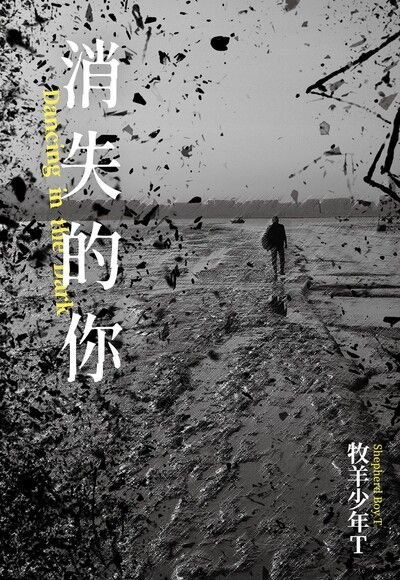
I chose my next book in Chinese, it’s going to be the winner of the Soji Shimada Mystery Award of 2023: 消失的你 by 牧羊少年T (HK).
I read 交錯 by四弄一號, which was a finalist of the same year. I found this book really good, so I’m curious to read the one the jury judged even better.
I haven’t read a Hong Kong author in a while too! So this is a good opportunity to.
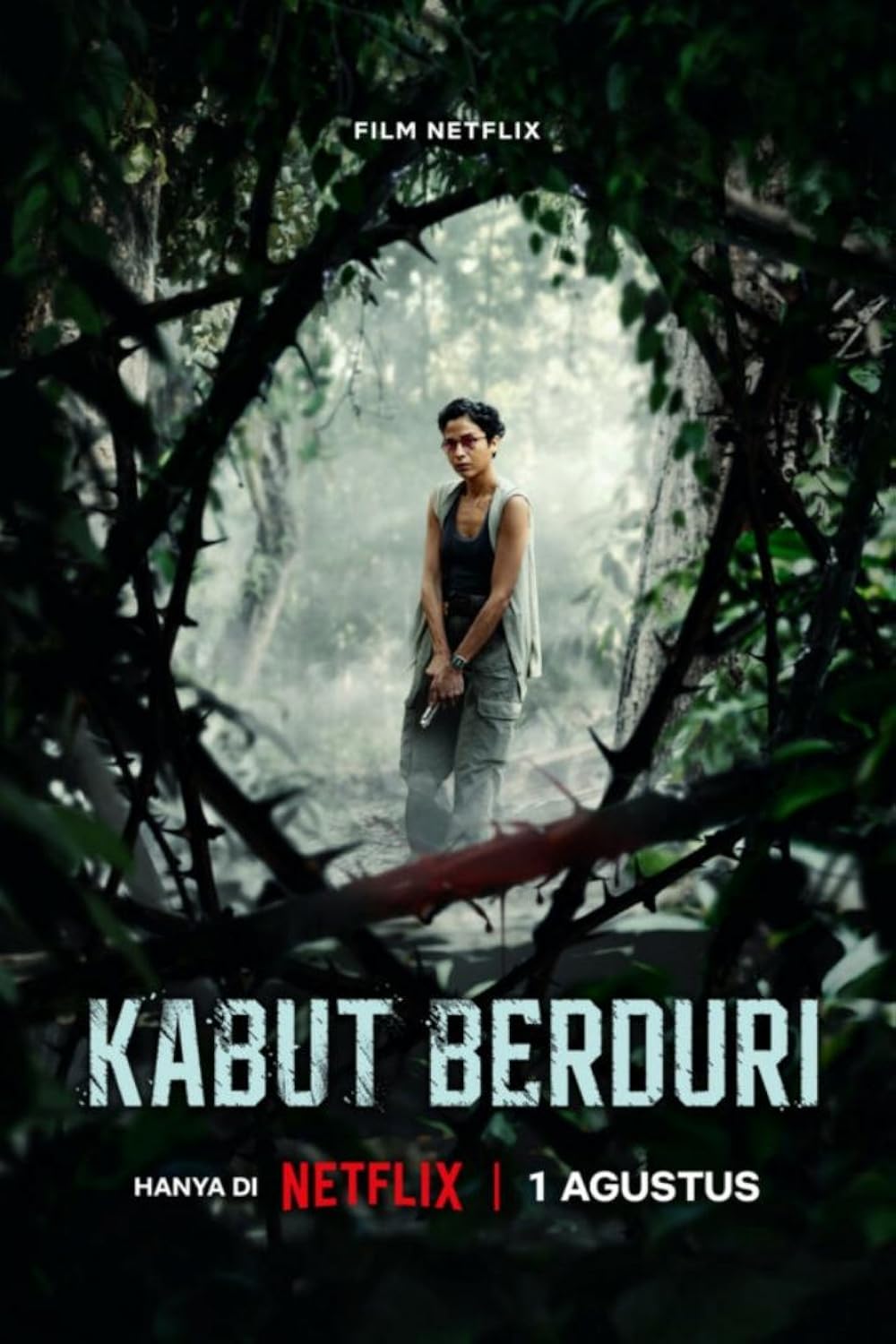
It’s funny I can’t tell whether I liked this film or not. There’s nothing I didn’t like really, but I found the setting to be the most interesting, whereas the plot kind of failed to get me invested.
There’s really a lot happening in the film, serial killings, Dayak community, the legend of the ghost of a communist leader, child trafficking, corruption, and even a local policeman who needs to hide his Dayak identity… And a two hours film doesn’t seem long enough to cover everything. The film also had to dedicate screen time to our main character’s own past trauma, which is a trope I’m really tired of. All crime films and series need to feature a detective who will eventually face their own demons/traumatic past, etc. In this film in particular, I don’t think it brought much, it just took time away from the case and the characters involved in it. I also don’t think that Sanja being an outsider brought that much to the plot, Thomas or a local officer could have been the lead detective imo.
The investigation was also not very suspenseful… I felt like it jumped from scene to scene without real investigative work in-between.
To me it feels like the film should have been a 4-5 episode series, but instead of watching the series, I just watched a 2-hour long recap. I really wish the film had spent more time on all the topics and characters involved, so I would have felt more invested in the case.
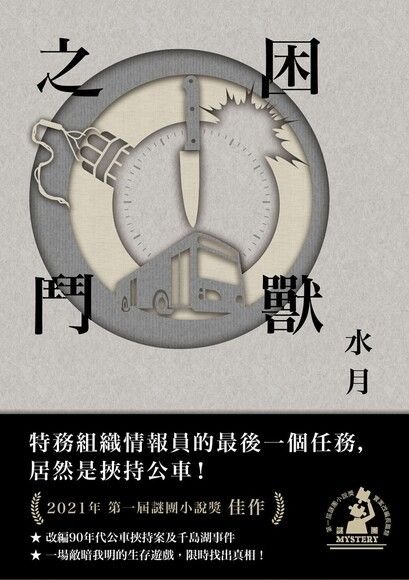
First time reading a novel that won the 謎團小說獎! I really like the idea of fiction based on real historical cases, and the novel has been a good opportunity for me to learn more about Taiwan’s political landscape in the 90s as well as the two cases used in the novel, Taiwan’s first bus hijacking case, and more importantly Qiandao Lake Incident that was a major event in Taiwan’s recent history.
I think that knowing about the real cases makes reading the novel even more interesting. I found that the way the author used some details of the bus hijacking case to incorporate them in the fiction was very well done. It also follows the case very closely while delivering a completely different interpretation. The novel really managed to blend fiction and reality.
The only downside to me was everything related to Lin Wan. I found that a lot of things felt unrealistic, which is surprising because the novel stays so close to reality otherwise. But yeah, several elements surrounding this character lacked credibility to me: first of all, the art of disguise felt strangely off in this novel, then the character is supposed to be an elite agent, but he got duped several times and acts impulsively. The most annoying part to me was that he only spent two months with Cao Feng, so his attachment to her and everything he did afterwards feel disproportional.
And finally, all the twists were obvious very early, which is a bit unfortunate. Still, the novel was very suspenseful and entertaining, I learnt a lot too while reading it, it’s easy to read and fast paced… overall a very good spy thriller!
I ended up finishing the novel today, it reads very easily and the end was quite good too!
Liu Liankun
刘连昆: Liu Liankun (1933-1999)
There’s a mention of Liu Liankun in the novel, he was a major general in the People’s Liberation Army who provided crucial intelligence to Taiwan, notably during the Taiwan Straight Crisis in 1996. As Taiwan was undergoing its first democratic presidential election, China was conducting massive military exercises, firing missiles close to Taiwan. Liu Liankun revealed that the PLA did not intend to invade and that warheads of the missiles were empty.
But president Lee Teng-hui (李登辉) used this information to reassure the public, which allowed Beijing’s Ministry of State Security to realise someone must have leaked this piece of information, they ultimately arrested and executed Liu Liankun.
I really like how the novel mix real facts with fiction, real characters and fictional characters!
Finished chapter 9, I really love spy novels!
I do think several elements are not realistic, but I’m still enjoying the end very much. I might just read the last chapter today too.
Oh… now I see how the main story is going to link back to the Qiandao Lake incident! So exciting!!
I find that the author did a really good job at mixing the fiction with the real historical facts.
If I read 4 books a month, it’s 48 books a year, but assuming I’m reading evenly across three languages, it ends up being 16 books per language per year. If I read 5 books a month, it will be 20 books per language per year.
It’s not bad, but looking at the list of all the publications past and present I want to read, it feels impossible to catch up. Japanese mystery rankings and awards alone are hundreds of titles…
変な地図 is my 30th book finished this year!
I more or less had a goal of 50 books for 2026, so I’m ahead of schedule Not that it matters too much (I’m not that attached to these kinds of goals, I’m more interested in seeing in which language I read the most), but I’m still happy to see I have a good reading pace this year.
I played a lot of WWM today, mainly continuing the main story. The parts I played through were much easier! I felt like I understood almost everything for once.
Kaifeng is so breathtaking… I haven’t explored much, and I get lost so easily, but the atmosphere, the number of NPCs, the colours, the sounds… it’s fantastic.
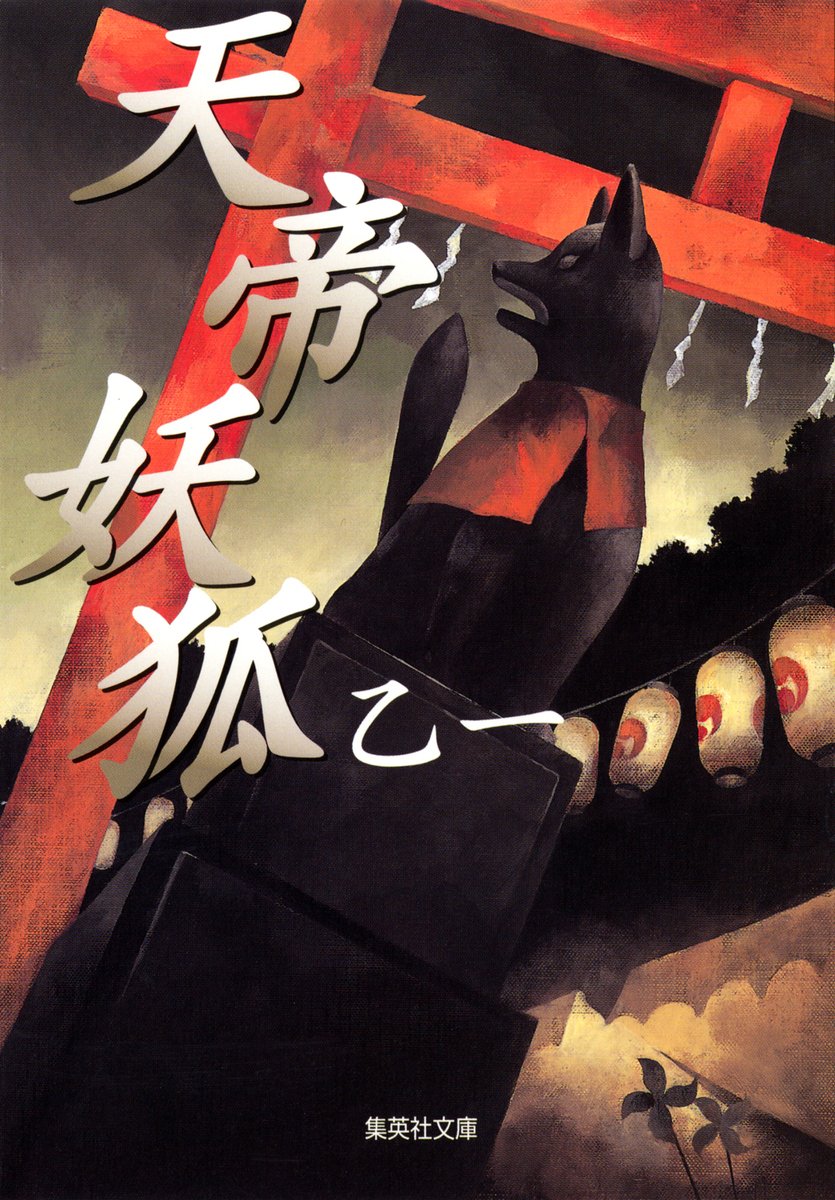
I chose my next Japanese novel! It’s going to be Otsuichi’s second book, 天帝妖狐.
I’m exploring Otsuichi’s bibliography more or less in chronological order, I read his debut novel recently and loved it. I’m afraid not everything will be available, and I’m listening to some other collections of short stories in parallel, but I’m trying to follow the order of publication as much as I can.
Also, I’m totally reading this tiāndì yāohú… I think that Chinese is more and more becoming the language I feel the most confortable with, even though I do think my Japanese is better. But I’m more immersed in spoken Mandarin (mostly through audiobooks and games) on a daily basis so it’s the language that comes to mind the most naturally when I see characters now.
Japanese pronunciation is (てんていようこ).