It’s the first book I read by this author, and I really loved it. However, there are one or two things that prevent me from listing it among my favourite books.
The plot is very intriguing, especially the beginning that sounds like SF almost, and I must say that the story stays engaging until the end. However, I do think that the setting was a bit long. You can argue that this is inevitable given that there are a lot of things to settle before deductions and investigation can really start, but that’s my point: I think that there might be too many mysteries happening at once, and some only get addressed later in the novel.
Second point is the end, it was good for sure, but I’m kind of skeptic still. Too many variables, too complicated, overall simply the same thing as my first point: too many elements.
But I value the entertaining aspect of genre fiction very high, and this novel was really suspenseful and engrossing, especially the second part.
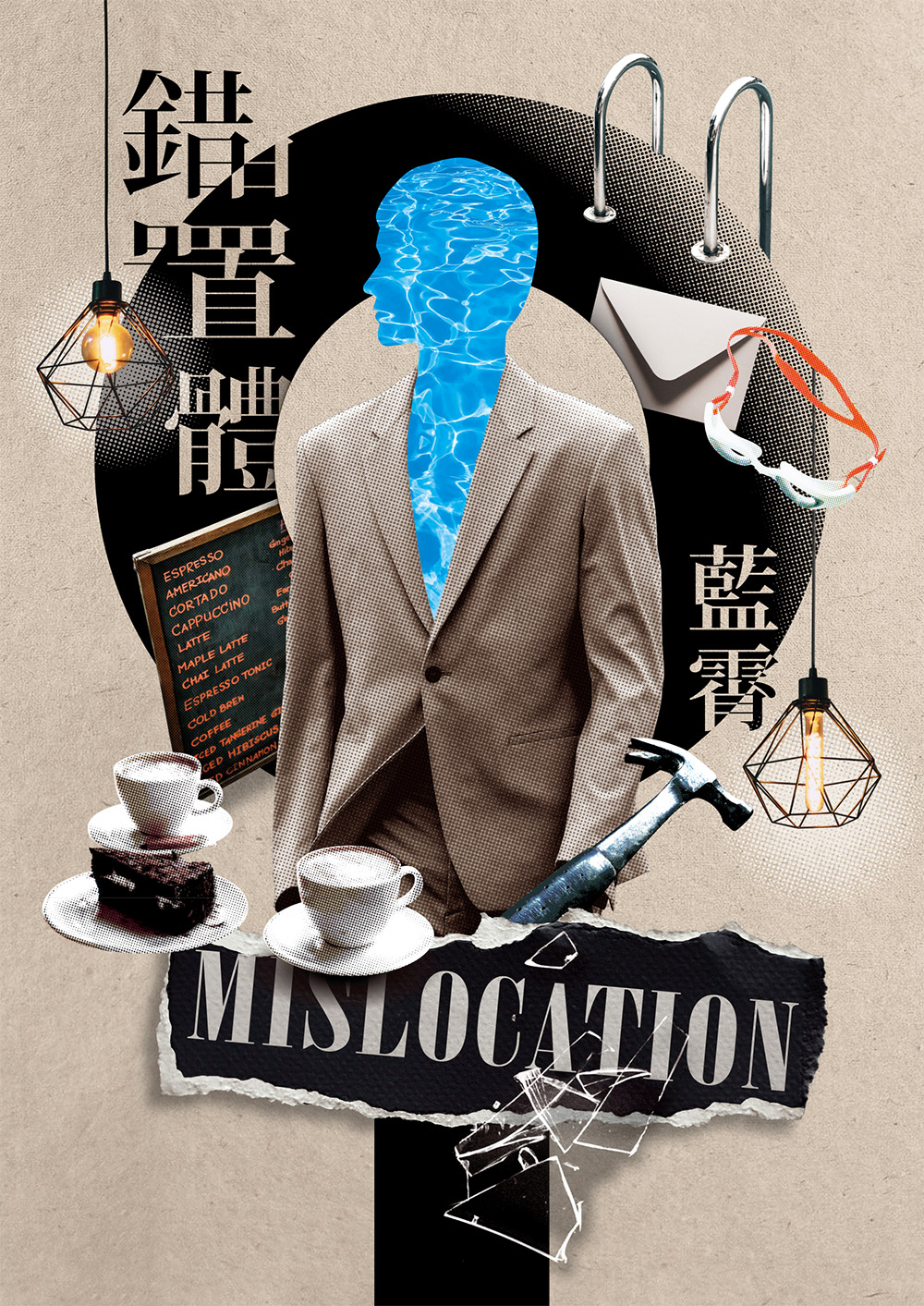
錯置體
錯置體 was selected to be featured in the 「アジア本格リーグ」 series in 2009 and was translated into Japanese, introduced as one of the precursor of honkaku mystery in Chinese language. The Japanese edition presented it as 台湾ミステリーの最前線をリードする、鬼才の異形の本格ミステリー .
In 2024, a new edition of 錯置體 has been published in Taiwan to celebrate its 20 years anniversary.
Part of a reading goal
2026 Readmoo Reading Challenge behind by Dec 31, 2026 ·123 days left ·6 of 10 read 60%
- 測字歐吉桑
- 努力是癮
- 進烤箱的好日子
- 不可知論偵探2:惡人正機篇
- 煙街
- 同名偵探事務所
- 魚眼
- 套條子
- 我從前認識的某個人
Review
Updates
Finished the last chapter!! As expected, it was impossible to put down, and I read the whole chapter in one-go.
However, I must say that the end did not entirely convinced me… everything sounds so complicated…
I finished chapter 4! It was such a great chapter. The book introduces a lot of things in the first half, several cases linked together, a lot of characters and episodes that seem impossible. I thought that the novel was going in too many directions at the same time, but chapter 4 ties everything together.
Only one chapter left!
Chapter 4 is really really great, one of the best things I’ve read recently!
Chapter 4 is so so good! 
Chapter 4 is a nice change of pace, I love Xiao Li’s style. Now the novel is both engrossing and funny too! 
I finished chapter 3 and I’m halfway through!
There was a passage that contained medical explanations, I did not understand everything that was said, but enough to follow, so it’s fine.
Chapter 3 is so great!! I wish I could read more today, but I don’t have time and I’m super tired.
And, I was able to change the font again! I don’t why it didn’t work last time, but this time it let me change the font for the main text, not just the letters and other stuff that have a different font.
I hate fonts that have horizontal strokes lighter and thinner than vertical strokes, especially if it’s so thin it’s barely visible. And minus point if they have serif (or the equivalent of serif).
But now I could choose the 華康青花黑體 font, same weight for all strokes, super uniform, nice thick black strokes without those decorative little triangles at the end of horizontal strokes. Simple and easy to read, I love it, it’s perfect! 
Only a few pages today, I’m really sleepy and tired. And the weather is so hot already, I can’t stand it anymore and it’s just May…
The passage I read also described characters enduring Southern Taiwan’s hot weather, so I could easily relate.
I finished chapter 2! So good!!
The novel is suspenseful and has a very intriguing plot! =D
I read a whole passage with the floor plans, and it was not difficult at all! I must have been very tired yesterday when I tried to tackle it, because today it felt very easy with the detailed maps. I can take screenshots with my e-reader, so I transferred the images to my phone. That way I could read and check the maps at the same time without needing to go back in the book, which I always find annoying to do with e-reader.
I wanted to finish the chapter today, but I start feeling tired again, so I’ll stop here for now. I’m waking up at 5 every morning right now and I can’t really go to bed early, so my attention span for books is very short.
I must say the novel is really really good, such an intriguing mystery! The passage I read was really engrossing.
I started chapter 2, and the story is really taking an expecting turn, it’s so intriguing! The book is starting to become a page-turner, BUT, I reached a point with maps/floor plans, and it looks very detailed. At the same time, it’s the first time I’m reading detailed descriptions of buildings and floor plans in Chinese, and it’s very difficult, even with the drawings. I don’t have the courage to tackle it right now, it’s going to be a touch passage.
I finished chapter 1! All along I was wondering how this novel would turn into a honkaku mystery (as it was stated in one of the prefaces), because the beginning didn’t feel like one at all, but now I can see how it could end up being honkaku after all. It’s very intriguing in any case.
I was hoping to finish the first chapter today, but reading in Traditional Chinese is quite tiring (even though the novel is not particularly difficult to read), so I’ll stop here for today.
One thing I noticed is that the ebook uses two different fonts (it happens often to differentiate between normal narration and a letter for example), and only one of these is customisable. That’s why I suddenly couldn’t change the font anymore. It’s unfortunate, as I’m afraid the font I can’t change will be the main one for the remaining of the book, and I really don’t like it.
Read a little bit today, the plot becomes more and more interesting.
I have a weird bug on Readmoo where I can’t change the font anymore, and the one by default is a pain to read (lines are too thin so the characters do not show well imo).
I didn’t read as much as I wanted, but the beginning is very engaging! And we have author self-insertion, I like it!
Finally starting 錯置體!
Post
Character names that were just mentioned once in chapter 2 are coming back in chapter 4. I’m glad I made a character list!
I always do that because I tend to forget foreign names more easily (I never do character list for novels I read in English or French), and because it’s useful for the reading in the case of Chinese (when I don’t know a character) and mostly Japanese.
Korean names are also tricky, I tend to mix them up easily if two characters have names that sound even remotely similar. I really have a hard time remembering names in Korean to be honest, if only I can see the hanja, then I remember the name immediately, but most of the time, you don’t see them. Like for example, names like 천현숙 and 전형수, I know they’re not the same at all, but I’m going to mix them up for sure if I don’t write them down somewhere.
Finally, given that I’m always reading several books at the same time, I sometimes stay several day without opening a book if I’m engrossed in another one, so it’s easier to forget who is who.
All along I had the feeling that Lao Qin must have been introduced in a previous work, and I now have confirmation, because there’s a passage that refers to a previous case involving this character, and the footnote says it’s in 關於高雄的殺意與哀愁.
It really feels like the reader is supposed to know Lao Qin (this being said, if you don’t like me, it doesn’t affect the novel at all), now it makes sense!
I’m adding 關於高雄的殺意與哀愁 to my list then, I’ll probably read it at some point because I really love Lao Qin, and I’m pretty sure now that 錯置體 will just continue hitting at things that happened in the past, but the novel probably won’t explain them (I imagined everything is in 關於高雄的殺意與哀愁).
Traditional characters are not a big problem to me, even though I do read more slowly in Traditional, but sometimes, there are characters that still puzzle me like 蒐 = 搜. I guess because it doesn’t look like a Traditional vs Simplified character at all.
I found a word I learnt in the lyrics of a song! 滂沱 pāngtuó (to describe rain as pouring, flooding, torrential). I’m so glad when it happens, makes everything feel worth it. It’s typically the kind of word I would not have looked up, because not knowing it doesn’t not affect the comprehension of the sentence 我永遠不會忘記,大雨滂沱的夜裡 (…). It’s obvious it describes the rain, and because we already have 大雨, it’s also obvious that it describes a rain pouring down.
So it’s the kind of word I won’t look up when I see it in a novel, but because I’m studying song lyrics (meaning, actually looking up every word I don’t know, and look for metaphors or hidden references), I already had this word in my flashcards.
Small victory!!
孟婆汤 by Chris Yu
Completely unrelated to the book, but because the name of the first chapter is 孟婆汤, and I didn’t know this word so I looked it up, I came across the song by Taiwanese singer Chris Yu called 孟婆汤. I believe it’s from 1999.
喝下這碗解藥
忘了所有的好
所有的寂寥
Here 孟婆汤 is seen as a blessing to forget everything after a heartbreak.
(Oh and by the way, I’m not super familiar with Mandapop, I do listen to a lot of music on YouTube, but I do lack the basis. I never heart of Chris Yu before…)
Characters
Qin, from the prologue was also a roommate from medical school, and now the beginning of chapter 3 mentions two other roommates, so they were at least 4. I thought it was a lot already, but now the narrator mentions they actually were 6 in a room.. that’s a lot!
So Hsieh Pin-lin rank in Chinese is: 高雄市刑事警察大隊偵一隊隊長.
隊長 is captain, 偵一隊 is 1st Investigation Team, 刑事警察大隊 is Criminal Investigation Corps.. so yes, I think it’s correct.
Kaohxiung Ciy Police Department is 高雄市政府警察局.
Quotes
我實在不知道該怎樣去陳述這整個怪奇的事件,才能把我心中這些日子以來的困惑與不安,翔實地表達出來。
Vocabulary
| Word | Reading | Definition |
|---|---|---|
| 模棱两可 | mó léng liǎng kě | equivocal, ambiguous |
I saw this expression in the novel, and it was one I learnt recently in Emilie SQ, but I had a hard time remembering it. Probably because I don’t know the character 棱. I should really work on hanzi more, and not just words.
| Word | Reading | Definition |
|---|---|---|
| 怵目驚心 | chù mù jīng xīn | lit. shocks the eye, astonishes the heart (idiom); shocking, horrible to see, a ghastly sight |
I saw this word in the novel, and it’s an expression I learnt while studying a song lyrics! But in the song, the expression was 觸目驚心. That’s interesting! Both expressions have the same meaning.
| Word | Reading | Definition |
|---|---|---|
| 奈何橋 | nàihé qiáo | Naihe Bridge |
Naihe is a river in Hell in Buddhism, those who wants to be reincarnated have to cross the Naihe Bridge. Then you will drink the Old Lady Meng Soup, forget your past life and reincarnate. So that’s how both 孟婆湯 (first chapter) and 牛头马面 (second chapter) are linked. The chapter names carry a lot of meaning then. And it’s interesting that it’s reversed, because if I understood correctly the souls of the dead will first encounter 牛头马面 and only if they pass the bridge will they receive 孟婆湯.
| Word | Reading | Definition |
|---|---|---|
| 牛头马面 | niútóu mǎmiàn | Ox-Head and Horse-Face |
This is in the name of chapter 2: 眩晕的牛头马面.
Ox-Head and Horse-Face are two guardians of the underworld in Chinese mythology, their role is to lead the soul of the dead to be judge according to their actions in the living world. It is also said that they keep the Naihe Bridge and when the souls of those who committed crime try to cross, they push them down, and let them be devoured by the monsters lurking below.
| Word | Reading | Definition |
|---|---|---|
| 孟婆湯 | Mèngpó tāng | Old Lady Meng’s soup: Mengpo serves a soup to the souls going to the underworld, this soup is said to erase all the memories from their previous life. |
| 解離症 | jiělí zhèng | Dissociative disorders |
| 無精蟲症 | wú jīnchóng zhèng | Azoospermia |
| 杜撰 | dù zhuàn | to fabricate, to make sth up |
| 玄關 | xuán guān | entrance hall; vestibule |
| 值日生 | zhí rì shēng | student on duty |
| 繩索 | shéng suǒ | rope |
| 榔頭 | láng tou | hammer |
| 絛蟲 | tāo chóng | tapeworm |
It’s so weird, I feel like I never saw the word 杜撰 before… Seems like a common word though. So weird…